
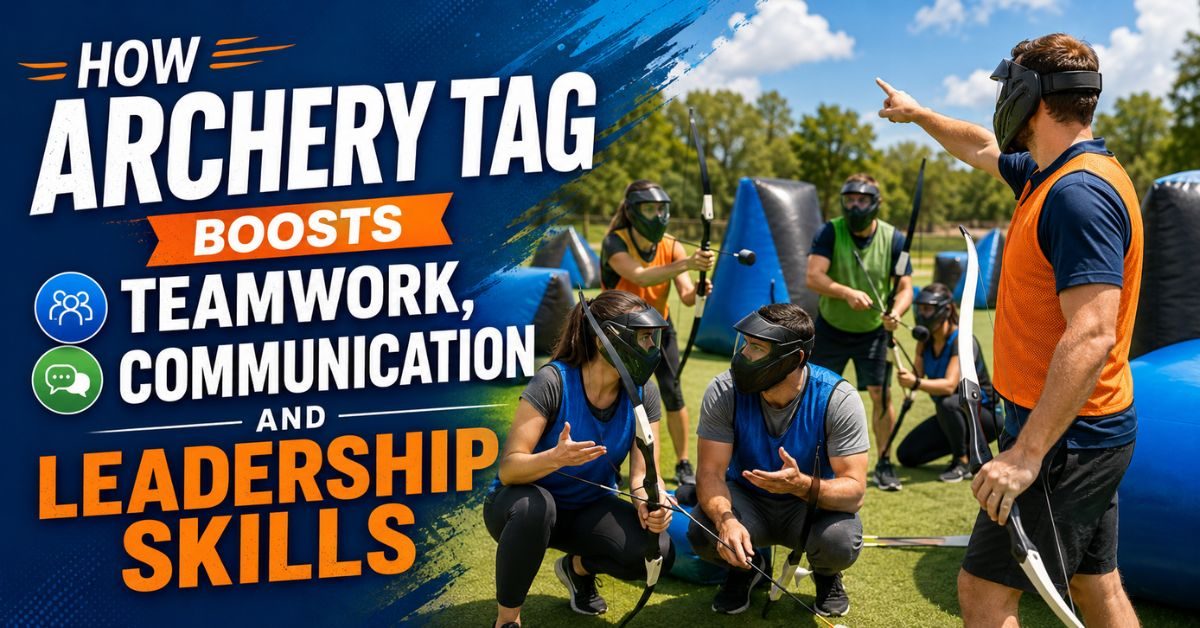
Many teams work together every day, but that does not always mean they collaborate well. In a busy workplace, people often communicate through short messages, attend meetings with fixed roles and solve problems within their own departments. Over time this can create gaps: employees may hesitate to speak up, new team members may struggle to connect and potential leaders may not get enough chances to practice decision-making in a low-pressure setting.
That is why activity-based team building still matters. When people step outside the usual office environment they get to interact in a more natural and active way. Archery Tag is a strong example of this. It combines strategy, movement, friendly competition and quick decision-making, making it more than just an outdoor game. For companies, schools and groups in Singapore it offers a practical way to build teamwork, communication and leadership skills through experience rather than lectures.
Why Archery Tag Works So Well for Team Development
Archery Tag is a team-based activity where participants use bows and soft foam-tipped arrows to tag opponents, defend teammates and complete game objectives. The rules are easy to understand but winning requires more than aim. Teams need to plan, communicate, adapt and support one another under changing conditions.
This is what makes the activity valuable. It places participants in a playful but realistic environment where they must respond quickly, make decisions together and trust their teammates. Unlike a normal office task, the game gives instant feedback. If a team does not communicate, they get exposed. If one person tries to do everything alone the group loses momentum. If someone steps up with a clear plan, the whole team performs better.
For Singapore workplaces, where teams may include people from different departments, cultures, seniority levels and working styles, Archery Tag creates a shared experience that cuts across formal roles. A manager, intern, designer, salesperson and operations executive can all contribute in different ways.
Building Teamwork Through Shared Objectives
It Turns Individual Effort into Group Strategy
One of the biggest teamwork lessons in Archery Tag is that individual skill is not enough. A person may be fast, accurate or confident but they still need support from the group. Teams quickly realise that the best results come from coordinated movement, role assignment and shared awareness.
For example, one player may focus on defending the base, another may create distractions, while others move forward to apply pressure. This simple structure teaches an important workplace lesson: strong teams do not depend on everyone doing the same thing. They depend on people understanding their roles and contributing toward a common goal.
It Helps Teams Recognise Different Strengths
In a typical workplace, some strengths are more visible than others. The loudest speaker in a meeting may appear more confident, while quieter team members may not always get noticed. Archery Tag changes that dynamic.
A quiet employee might become excellent at observing opponents and calling out openings. Someone who is not the fastest runner may become a calm defender. A junior staff member may surprise the group by suggesting a smart tactic. These moments help teams appreciate one another beyond job titles.
Improving Communication Under Pressure
Clear Communication Becomes Essential
In Archery Tag, vague instructions do not work. Shouting go there or watch out is rarely enough. Teams need short, clear and useful communication. Players must quickly tell each other where opponents are when to move, who needs cover and when to change strategy.
This mirrors workplace situations where communication must be direct and timely. During a project launch, client issue or tight deadline, unclear communication can slow everyone down. Archery Tag gives teams a safe way to practise being concise, alert and responsive.
Listening Matters as Much as Speaking
Communication is not only about giving instructions. It is also about listening. During a game, players who ignore teammates often make poor decisions. They may move too early, leave gaps in defence or miss an opportunity to support someone.
The activity encourages active listening because every voice can carry useful information. In the workplace this translates into better collaboration during meetings, stronger cross-functional coordination and fewer assumptions between team members.
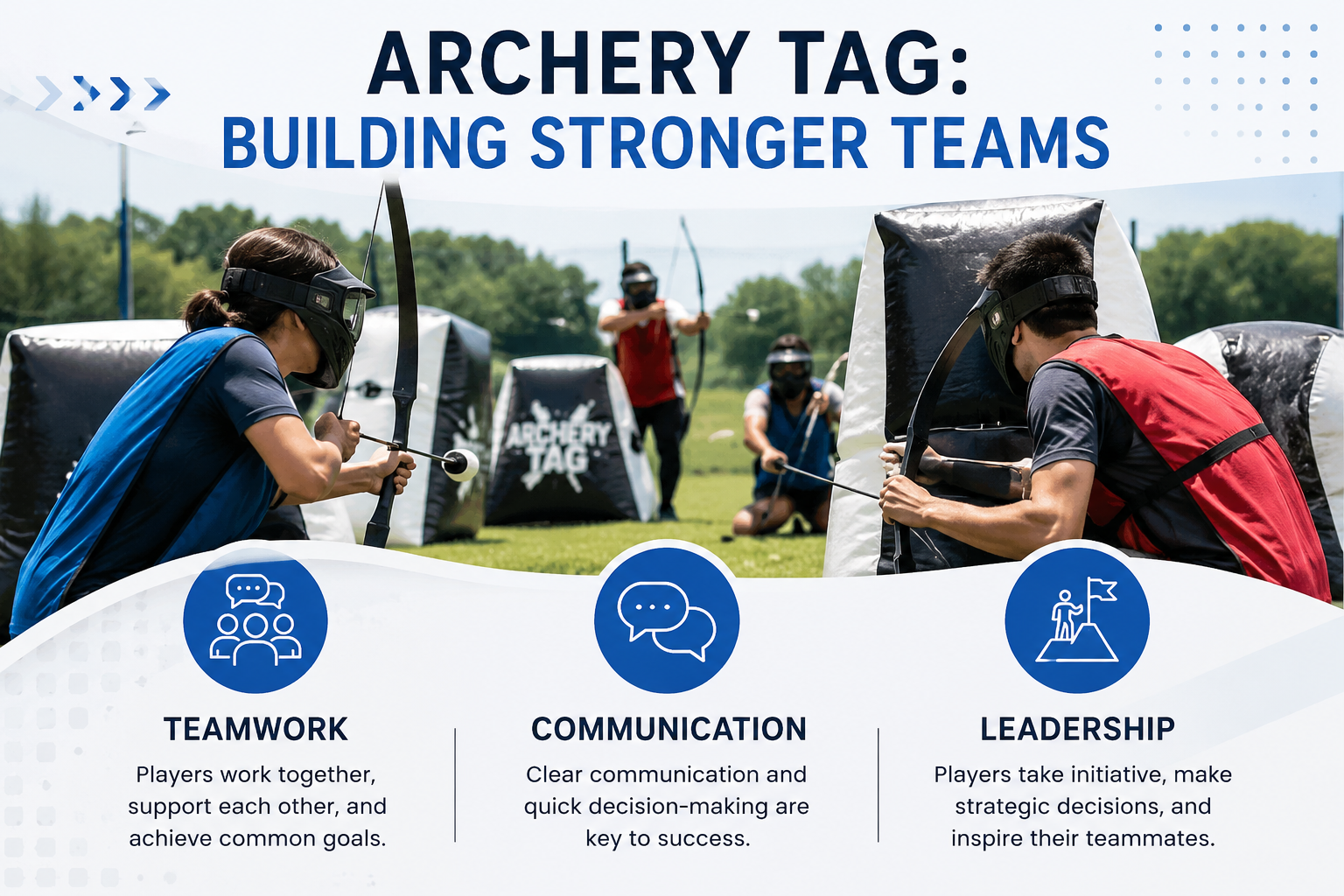
Developing Leadership Skills in Real Time
Leadership Appears Through Action Not Job Titles
One of the most interesting parts of Archery Tag is that leadership often comes from unexpected people. The person with the highest position in the office may not automatically lead the team during the game. Instead, leadership naturally shifts to whoever can stay calm, read the situation and guide others effectively.
This is valuable for organisations because it gives emerging leaders a chance to demonstrate initiative. It also helps senior managers observe how employees behave when plans change quickly.
Participants Practise Decision-Making
Every round requires decisions. Should the team attack or defend? Should they spread out or stay compact? Should they protect a strong player or use them to create pressure? These choices have immediate consequences.
The benefit is that participants practise making decisions without the fear of serious failure. If a strategy does not work, the team can reset, learn and try again. This builds confidence, especially for employees who may be hesitant to take initiative in the workplace.
Good Leaders Learn to Adapt
In Archery Tag, no plan stays perfect for long. Opponents move, teammates get tagged, and opportunities appear suddenly. Good leaders must adjust instead of forcing the same plan.
This is directly relevant to modern workplaces. Teams often deal with shifting priorities, customer demands and unexpected problems. Archery Tag reinforces the habit of staying flexible while keeping the group focused on the objective.
What Participants Practise During Archery Tag
A well-run Archery Tag session can help participants practise several workplace-relevant skills in a natural way:
- Role clarity: understanding who does what and why it matters.
- Trust: relying on teammates for cover, support and information.
- Quick thinking: making decisions without overanalysing every move.
- Awareness: paying attention to both the immediate task and the wider situation.
- Constructive feedback: discussing what worked and what needs to change after each round.
- Confidence: stepping forward, trying a strategy and learning from the outcome.
These skills are not developed through one big speech. They are built through action, reflection and repeated attempts.
Why Archery Tag Is Especially Useful for Corporate Teams
It Breaks Down Workplace Barriers
In many organisations, employees mainly interact with people from their own teams. Archery Tag gives departments a reason to mix naturally. Finance may work with marketing. HR may partner with operations. Senior leaders may play alongside new hires.
Because the activity is informal and active, conversations feel less forced. People laugh, plan, compete and support each other in ways that rarely happen during normal office hours.
It Supports Hybrid and Remote Teams
Many teams in Singapore now work across hybrid schedules. While online meetings are efficient, they do not always create strong personal connection. An outdoor team-building activity gives employees a shared memory and a reason to reconnect beyond screens.
After playing together, people often find it easier to approach one another at work. A short shared experience can make future collaboration feel more comfortable.
It Encourages Healthy Competition
Competition can be useful when it is handled well. Archery Tag creates friendly competition where the goal is not to embarrass others, but to energise the group. Teams compete, but they also learn sportsmanship, respect and resilience.
This matters in business settings. Healthy competition can motivate people, but only when teams still respect each other and stay aligned with shared goals.
How to Make an Archery Tag Session More Meaningful
To get the best results from Archery Tag, organisers should connect the activity to real workplace outcomes. The game itself is fun, but the learning becomes stronger when teams reflect on what happened.
Before the session, companies can:
- Set a clear objective: decide whether the focus is communication, leadership, bonding or collaboration.
- Mix teams intentionally: avoid grouping only close colleagues together.
- Encourage rotating roles: let different people lead, defend, plan or coordinate.
- Allow time for reflection: ask teams what they changed between rounds and why.
- Connect lessons back to work: discuss how the same behaviours show up in projects, meetings or client situations.
This turns the activity from a fun day out into a practical team-development experience.
The Role of Facilitators in Creating a Better Experience
A good Archery Tag session is not just about equipment. Facilitation matters. Trained facilitators help explain rules, manage safety, guide participants and keep the session inclusive. This is especially important when a group has different fitness levels, personalities or comfort zones.
For beginners, clear guidance helps reduce nervousness. For competitive participants, facilitators keep the game fair and focused. For companies, professional facilitation ensures the activity stays organised and purposeful.
This is where choosing an experienced provider makes a difference. A structured session helps participants enjoy the game while also gaining the teamwork benefits behind it.
Archery Tag as a Leadership Observation Tool
For managers and HR teams, Archery Tag can reveal useful behavioural insights. It shows how people respond when they are under mild pressure, how they communicate when things move quickly, and how they support teammates when plans fail.
This does not mean judging employees based on one game. Instead, it gives leaders a different lens. They may notice who encourages others, who thinks strategically, who adapts quickly, and who helps the team recover after setbacks.
These observations can support future coaching conversations, team planning and leadership development.
Why Singapore Teams Are Well-Suited for Archery Tag
Singapore’s work culture often values efficiency, professionalism and performance. While these qualities are important, teams also need space to build trust and human connection. Archery Tag offers that balance. It is active, structured and purposeful, but still light-hearted enough for participants to enjoy themselves.
It also works well for different group types, including corporate teams, school groups, community events and social gatherings. Because the activity does not require prior archery experience, most participants can join in with basic guidance and a willingness to try.
Choosing Archery Tag for Your Next Team-Building Event
If your team needs more than a standard meal or meeting-room activity, Archery Tag is a strong option. It brings people together through movement, shared goals and fast-paced problem-solving. More importantly, it gives teams a chance to practice the behaviours that matter at work: communicating clearly, trusting others, adapting quickly and leading with confidence.
For organisations in Singapore, a session with Epic Workshops can be a practical way to combine fun with real team-building value. Whether the goal is to strengthen collaboration, welcome new employees or refresh team morale, Archery Tag creates an experience people are likely to remember.
Conclusion
Archery Tag is more than an exciting outdoor activity. It is a practical training ground for teamwork, communication and leadership. The game creates situations where people must depend on one another, speak clearly, make quick decisions and adjust as a team. These are the same skills that help organisations perform better in real workplace challenges.
For Singapore companies and groups, the value lies in the blend of fun and purpose. Participants leave with stronger connections, better awareness of team dynamics and a clearer understanding of how collaboration works under pressure. As workplaces continue to evolve, activities like Archery Tag will remain useful because they develop something every team needs: people who can work, communicate and lead well together.
FAQs
Is Archery Tag suitable for corporate team building?
Yes. Archery Tag is suitable for corporate team building because it encourages teamwork, communication, leadership and problem-solving in an active setting.
Do participants need archery experience?
No. Participants do not need prior archery experience. Basic instructions and safety guidance are usually provided before the game begins.
How does Archery Tag improve communication?
It improves communication by requiring players to give quick updates, share strategy, warn teammates and respond to changing situations during gameplay.
Can Archery Tag help identify leaders?
Yes. The activity can reveal natural leadership qualities such as calm decision-making, strategic thinking, encouragement and adaptability.
Is Archery Tag safe for beginners?
Yes, Archery Tag is designed to be beginner-friendly when proper equipment, safety rules and trained facilitation are provided.