Workplaces today are under more pressure than ever to perform, adapt and deliver quickly. In Singapore’s fast-paced business environment, employees often manage tight deadlines, back to back meetings, digital distractions, hybrid work challenges and the quiet pressure to stay productive even when they feel mentally drained. Over time this can affect more than mood. It can reduce focus, weaken teamwork, lower motivation and make employees feel disconnected from the organisation.
This is why mental wellness activities are no longer just a nice to have workplace perk. They are becoming an important part of how companies support healthier, more engaged and more resilient teams. When employees are given space to pause, reflect, connect and reset, they return to work with better clarity and a stronger sense of belonging.
For companies in Singapore, mental wellness activities such as mindfulness workshops, creative craft sessions, gratitude activities, stress relief experiences, and team bonding programmes offer a practical way to care for employees while strengthening workplace culture.
What are mental wellness activities for employees?
Mental wellness activities are workplace experiences that help employees relax, manage stress, reflect, and build emotional resilience. Examples include mindfulness workshops, art jamming, gratitude journaling, terrarium making, and creative stress relief sessions.
Mental Wellness Activities Help Employees Manage Stress Before It Builds Up
Stress does not always appear suddenly. In many workplaces, it builds quietly through repeated pressure, unclear priorities, constant notifications, and limited recovery time. Employees may continue working, attending meetings, and meeting deadlines, but internally they may feel tired, distracted, or emotionally overloaded.
Mental wellness activities create intentional pauses in the work routine. These pauses allow employees to slow down, step away from daily demands, and reconnect with themselves in a healthier way.
Why Small Mental Resets Matter at Work
A short creative or mindful activity can help employees shift out of “work mode” and into a calmer state. For example, a team that spends an hour in an art jamming or terrarium-making session is not just producing a handmade item. They are focusing on colours, textures, movement, and simple decisions that do not carry workplace pressure.
This kind of activity helps employees clear mental clutter. It gives the brain a break from emails, targets, and problem-solving. When employees return to work after a meaningful reset, they often feel more settled and ready to focus.
Employee Engagement Improves When People Feel Cared For
Employee engagement is not only about salary, job titles, or performance incentives. People are more likely to stay engaged when they feel valued as human beings, not just as workers. Mental wellness activities send a clear message: the organisation understands that employees have emotional needs, not just professional responsibilities.
When employees feel that their company makes room for well-being, they are more likely to show up with trust, openness, and commitment. This matters because disengagement often starts when people feel unseen, unheard, or constantly pushed without support.
Mental Wellness Builds Emotional Connection
A well-designed wellness activity gives employees a shared experience outside normal work conversations. Instead of discussing deadlines or project updates, colleagues may talk while making a craft, reflecting on gratitude or participating in a calming group activity.
These informal moments often create stronger workplace relationships. A quiet employee may open up during a creative session. A manager may become more approachable when participating alongside the team. A new joiner may feel included more quickly when the setting is relaxed and non-competitive.
Creative Activities Make Stress Relief More Accessible
Not every employee feels comfortable talking openly about stress, anxiety or emotional challenges. This is especially true in professional environments where people may worry about being judged or seen as less capable.
Creative mental wellness activities offer a softer entry point. Employees do not have to explain their stress directly. Instead, they can express themselves through making, designing, painting, journaling, or crafting.
Hands-On Workshops Reduce Pressure
Hands-on activities are effective because they keep people engaged without forcing them to perform. There is no need to be artistic or perfect. The value comes from the process, not the outcome.
Examples of accessible workplace mental wellness activities include:
- Art jamming for mindful expression and emotional release
- Terrarium making for calm, focused, nature-inspired creativity
- Gratitude journaling to encourage reflection and positive awareness
- Coaster making or resin crafts for relaxing, repetitive movement
- Collaborative mural painting to encourage teamwork and shared expression
These activities work well because they are simple, inclusive and suitable for different personality types. Employees can participate at their own pace while still feeling part of the group.
Mental Wellness Activities Strengthen Workplace Relationships
Stress often becomes harder to manage when employees feel isolated. A person may be surrounded by colleagues but still feel unsupported if conversations are purely task-focused. Mental wellness activities help shift workplace interaction from transactional to relational.
When teams spend time together in a calm, creative environment, they get to know one another beyond roles and job scopes. This can improve communication, patience and empathy during regular work situations.
Better Relationships Lead to Better Collaboration
A team that understands each other on a more human level is often better equipped to handle pressure. During busy periods, colleagues who have built trust are more likely to ask for help, offer support and communicate honestly.
For example, after a shared wellness workshop, a team member may feel more comfortable telling a manager that a workload is becoming overwhelming. Another colleague may notice when someone seems unusually quiet and check in. These small behaviours can prevent stress from turning into conflict, burnout or disengagement.
Mindfulness Helps Employees Stay Present and Focused
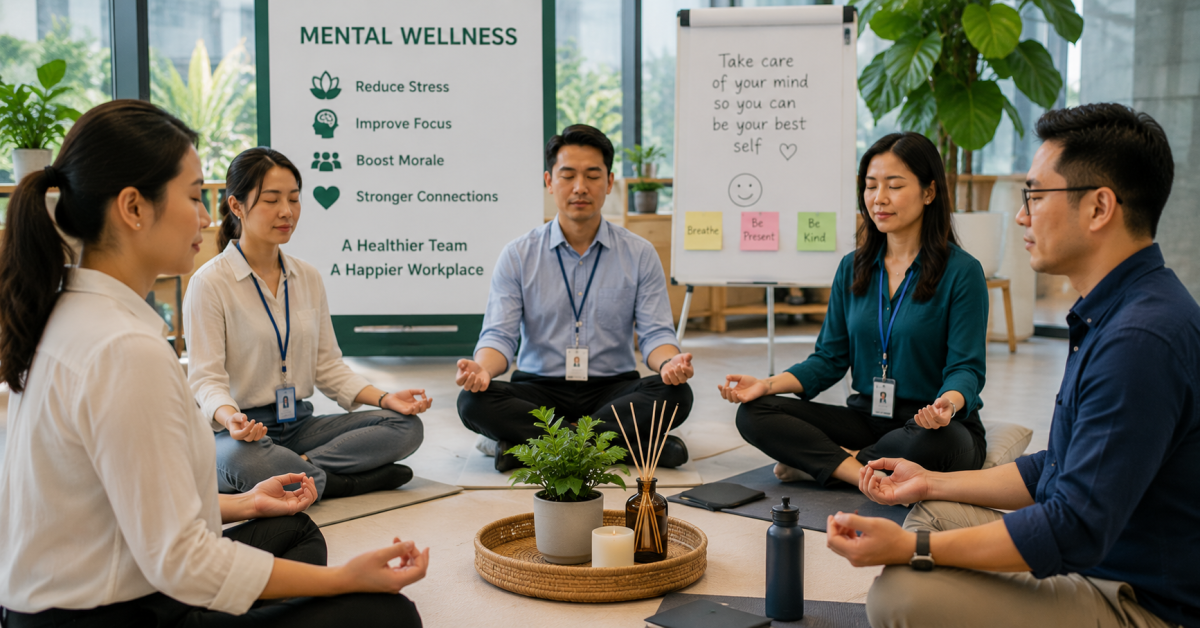
Modern work can easily pull employees in many directions at once. Messages, meetings, deadlines and multitasking can make it difficult to stay focused. Mindfulness-based activities help employees practise slowing down and paying attention to the present moment.
In a workplace setting, mindfulness does not need to feel formal or intimidating. It can be introduced through creative workshops where employees focus on simple, calming actions such as painting, arranging plants, shaping clay or creating patterns.
Mindfulness Through Craft Feels Natural
Craft-based mindfulness is practical because it gives employees something physical to focus on. Instead of being told to clear the mind participants naturally pay attention to what they are doing with their hands.
This makes mindfulness easier for beginners. As employees focus on colours, shapes, textures, and small details they gradually become more present. This supports better concentration, emotional regulation and patience, all of which are valuable in the workplace.
Gratitude Activities Encourage a Healthier Workplace Mindset
In busy workplaces, employees often focus on problems: what went wrong, what is delayed, what needs fixing, and what target must be met next. While problem-solving is necessary, a constant focus on pressure can affect morale.
Gratitude-based mental wellness activities help employees pause and notice what is still positive, meaningful or supportive in their work and personal lives.
Gratitude Supports Team Morale
A gratitude journal, appreciation card, or reflective craft activity can help employees recognise helpful colleagues, personal progress, and small wins. This does not ignore workplace challenges. Instead, it balances them with a healthier perspective.
For teams, gratitude activities can improve morale by encouraging appreciation. When employees feel recognised, even in small ways, they are more likely to feel connected and motivated.
Mental Wellness Workshops Support Better Leadership
Mental wellness is not only an employee issue. It is also a leadership responsibility. Managers shape the tone of the team through their communication style, workload expectations, and willingness to listen.
Wellness activities can help leaders become more aware of the emotional climate within their teams. A relaxed workshop setting may reveal signs of fatigue, low morale, or disconnection that are harder to notice during formal meetings.
Leaders Learn by Participating
When managers join mental wellness activities with their teams, they show that well-being is not separate from work culture. Their participation can reduce hierarchy and make employees feel safer to speak honestly.
Strong leaders do not treat wellness as a one-off event. They use these activities as a starting point for better conversations, healthier expectations, and more supportive team habits.
Mental Wellness Activities Can Reduce Burnout Risk
Burnout often develops when employees feel emotionally exhausted, disconnected, and unable to recover from ongoing work demands. While a single workshop cannot solve deep workplace issues, regular mental wellness activities can help reduce the risk by creating healthier rhythms.
These activities remind employees to rest, reset, and seek support before they reach breaking point.
Healthy Recovery Should Be Part of Work Culture
Companies can support stress relief more effectively by making wellness part of the employee experience, not just an annual event.
Practical ways to do this include:
- Scheduling wellness activities during work hours, not only after work
- Offering a mix of quiet, creative, reflective, and social activities
- Encouraging managers to check in with teams after busy periods
- Creating safe spaces for employees to share feedback
- Linking wellness activities with broader support such as flexible work practices or employee assistance programmes
When recovery becomes normal, employees are less likely to see stress as something they must handle alone.
Why Mental Wellness Activities Are Especially Relevant in Singapore
Singapore’s workplace culture is known for ambition, efficiency, and high standards. These qualities help businesses grow, but they can also create pressure for employees to keep pushing even when they need rest.
Mental wellness activities fit well into this environment because they are practical, structured, and easy to implement. Companies do not need to overhaul their entire workplace culture overnight. They can begin with guided sessions that help employees relax, connect, and learn simple coping habits.
For corporate teams, schools, community groups, and organisations, activity-based wellness workshops provide a balanced approach. They are professional enough for workplace settings, but relaxed enough to feel enjoyable and human.
How Epic Workshops Makes Mental Wellness Practical and Engaging
Epic Workshops offers mental wellness activities in Singapore that use creative, hands-on experiences to support emotional well-being, stress relief, and team connection. Instead of relying only on talks or presentations, these workshops allow participants to learn through doing.
Themes such as mindfulness, reframing thoughts, relaxation techniques, gratitude, creative stress management, and staying connected make the experience more meaningful. Employees are not simply attending another corporate session. They are actively creating, reflecting, and interacting in ways that support mental wellness.
This practical format is especially useful for teams with different personalities. Some employees may enjoy quiet reflection, while others may prefer social interaction. Creative workshops can accommodate both, making them inclusive and approachable.
Choosing the Right Mental Wellness Activity for Your Team
The best activity depends on your team’s current needs. A team recovering from a demanding project may benefit from a calming craft workshop. A department struggling with communication may benefit from a collaborative activity. A newly formed team may need an experience that encourages connection and conversation.
Match the Activity to the Workplace Goal
Before choosing a session, companies should consider what they want the activity to achieve. For example, if the goal is stress relief, select a slow-paced, calming workshop. If the goal is engagement, choose an interactive activity that encourages participation. If the goal is emotional reflection, gratitude journaling or creative expression may be more suitable.
A thoughtful match ensures the session feels relevant rather than random.
Conclusion:
Mental wellness activities matter because they support the human side of work. They help employees manage stress, feel appreciated, build stronger relationships, and stay engaged in a healthier way. For businesses, this leads to better morale, smoother collaboration, and a more resilient workplace culture.
In Singapore’s fast-moving work environment, companies that take mental wellness seriously will be better positioned to retain talent, support performance, and create teams that can handle pressure without losing connection. The future of employee engagement will not only depend on productivity tools or workplace policies. It will also depend on whether organisations create space for people to pause, recover, and feel genuinely supported.
Mental wellness activities are a practical step in that direction. When done thoughtfully, they turn well-being from a corporate message into a lived workplace experience.
FAQs
How do mental wellness activities improve employee engagement?
They help employees feel valued, supported, and connected to their team. When people feel cared for, they are more likely to participate actively, communicate better, and stay motivated at work.
Are creative workshops effective for stress relief?
Yes, creative workshops can help employees shift focus away from work pressure and into calming hands-on activities. The process of making something can support relaxation, self-expression, and mental reset.
How often should companies organise mental wellness activities?
Companies can start with quarterly sessions and increase frequency during high-pressure periods. Regular activities are more effective than one-off events because they help build a healthier workplace rhythm.
Why are mental wellness activities important for Singapore workplaces?
Singapore workplaces often operate in fast-paced and performance-driven environments. Mental wellness activities give employees structured time to manage stress, connect with colleagues, and maintain better work-life balance.